Author: Fatimata Sow

  • Senegal: 15 gay men arrested for unnatural sexual acts.

    An investigation into the theft of a mobile phone, initiated following a complaint from a religious leader in the Diourbel region, led to the arrest of a group of 15 men suspected of “acts against nature.” In Senegal, this charge carries a penalty of up to 5 years imprisonment, under paragraph 3 of Article 319 of Law No. 65-60 of July 21, 1965. In addition, those found guilty face a fine ranging from 100,000 to 1,500,000 CFA francs (approximately €150 to €2,200).

    Two-year prison sentence requested, awaiting verdict

    The events reported by senenews began with a routine police investigation into theft, at the request of a religious dignitary who complained that his phones had been stolen.

    The suspect quickly gave his version of events, justifying his retention of the religious leader’s belongings by claiming a debt owed for a previously agreed-upon and unpaid sexual encounter.

    Further investigations into the circumstances of the relationship between the two men led to the arrest and searches of 15 men, all suspected of “unnatural acts,” with incriminating evidence linked to the discovery of messaging history on the dignitary’s phone, which had the WhatsApp application installed.

    The individuals involved, all from Diourbel and the surrounding region, were taken into custody and have already appeared before a judge. According to our colleagues at seneweb, 13 of them have been placed in pre-trial detention, while two others have been released.

    While prosecutor Farba Ngom requested a two-year prison sentence for 13 of the accused on Thursday, December 11, the court has decided to deliver its verdict on December 18.

    Forced anal tests conducted in Senegal

    During the investigations, local media revealed that some of the defendants underwent forced anal tests to prove their homosexuality, an act considered torture by the United Nations.

    This is the first documented case of its kind in this West African country, a clear violation of Article 7 of the Senegalese Constitution, which states that “every individual has the right to bodily integrity.”

    Finally, the HIV status of one of the accused was revealed in the press, adding the stigma surrounding HIV to the repression of homosexuality. The repercussions of this case continue to resonate in the Senegalese political arena, as Mame Mactar Guèye of the conservative NGO Jamra (meaning “the ember” in Wolof) is using this affair to highlight that a sixth bill in nine years proposing harsher penalties for homosexuality was introduced this year. Abdou Karim Gueye, from the Nittu Degg (“Woke” or “Doubout” in Wolof) movement, is behind this initiative. He has been banned from entering the European Union since 2020.

    To date, all these attempts have failed or been blocked.
  • The Senegalese government is warning the organizers of an LGBTQIA+ event.

    Senegalese authorities adopted a firmer stance on Friday, July 11, after stating that they had learned of the planned screening of a film that addresses the topic of sexual minorities. Homosexuality is illegal in Senegal and considered “unnatural.”

    The path towards the criminalization of homosexuality continues in Senegal. A planned film screening on LGBTQIA+ issues, organized, according to Senegalese authorities, by the Dutch embassy and the regional office of the United Nations High Commissioner for Human Rights, sparked controversy this Friday.

    The event, which was to be followed by a discussion, angered the government.

    In a press release, the Ministry of African Integration and Foreign Affairs firmly reiterated that “the activities carried out by diplomatic and consular missions, international organizations, and non-governmental organizations on Senegalese territory must strictly comply with the laws and regulations in force in the country and scrupulously respect the cultural, religious, and social values that underpin the Senegalese nation.”

    “Senegal does not accept any form of propaganda or promotion of the LGBTQI phenomenon.”

    According to the authorities, minority rights are a matter of propaganda: “Senegal does not accept any form of propaganda or promotion of the LGBTQI phenomenon within its territory. This position has been clearly and repeatedly expressed by the highest authorities of the country,” the text adds.

    As the issue of the criminalization of homosexuality resurfaces in public debate, Minister Yacine Fall has warned the organizers of this meeting.

    “The government reserves the right to take all appropriate measures against any organizers of such activities and even against participants, regardless of their origin, status, or rank, in accordance with the laws and regulations in force,” she warned in her statement.

    At the end of June, a draft law aimed at strengthening existing legislation was submitted. If this bill is passed, the penalties for those who commit what the authorities consider an “unnatural act” could increase to up to fifteen years in prison.

    Homosexuality punishable by law

    Currently, Article 319.3 of the Penal Code stipulates imprisonment for one to five years and a fine of 100,000 to 1,500,000 CFA francs (150 to 2,200 euros) if an “unnatural act with a person of the same sex” is committed.

    While Senegalese public opinion is reportedly in favor of such a toughening of the law, according to the French newspaper Le Monde, “in practice, the adoption of this proposal by Parliament is proving difficult, as it could destabilize some of Senegal’s diplomatic relations.”

    In May 2024, in Dakar, during a conference with Jean-Luc Mélenchon on relations between Africa and Europe, Senegalese Prime Minister Ousmane Sonko declared that Western activism in favor of sexual minorities could trigger a “new casus belli” with his country.

    He also deplored the fact that “the issue of gender regularly appears in the programs of most international institutions and in bilateral reports, often even as a conditionality for various financial partnerships.”

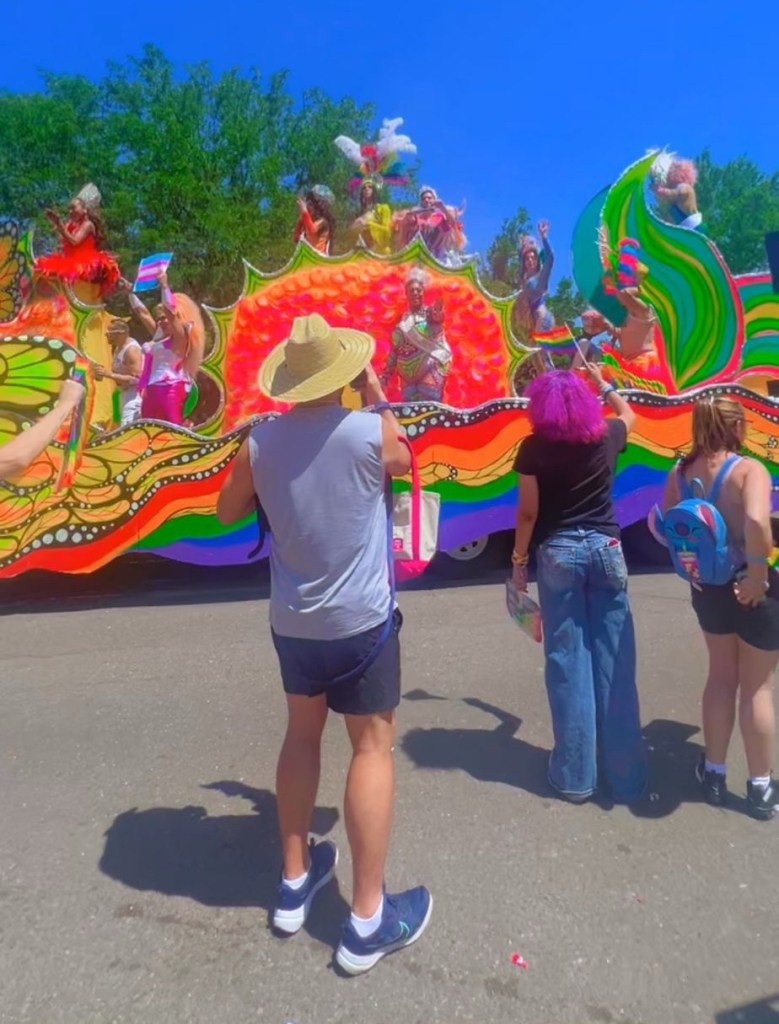
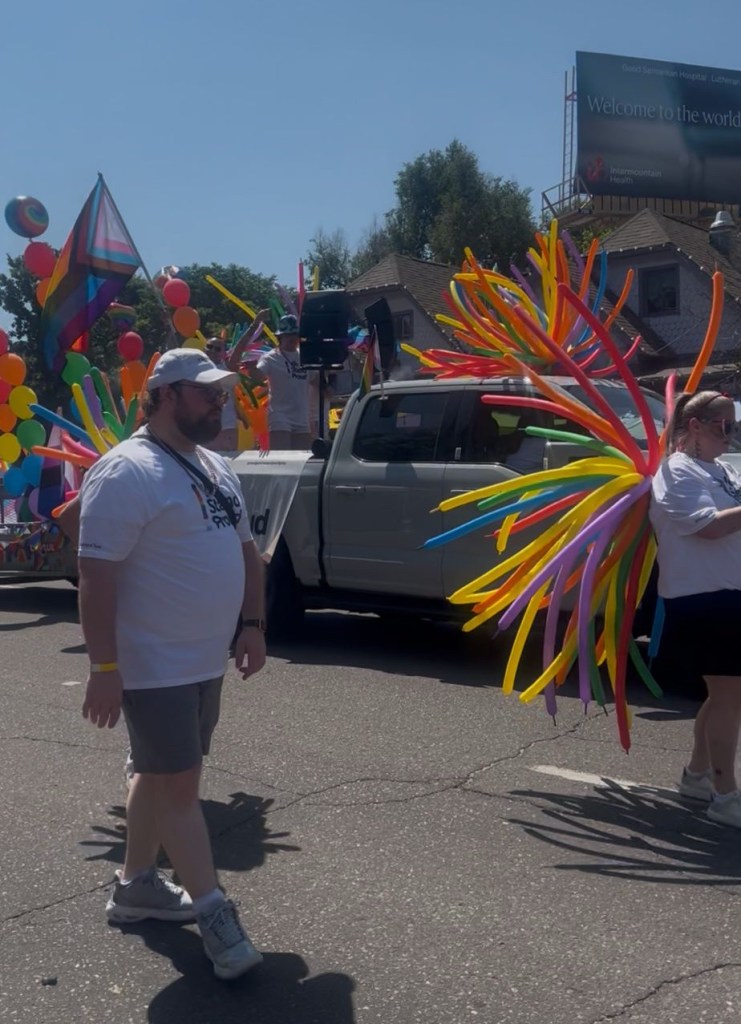
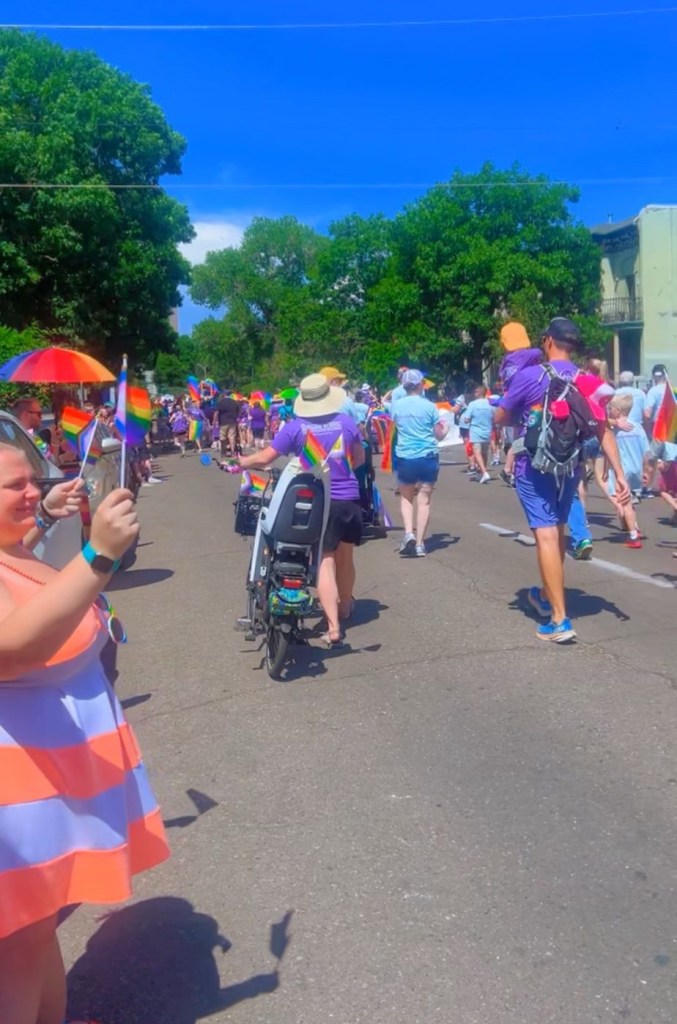
  • In pictures: Thousands of people marched through the streets of Denver to celebrate the Vizzy Pride Parade 🏳️‍🌈

    Thousands of people gathered this Sunday, June 29, 2025, between 9:30 a.m. and 12:30 p.m. to celebrate the pride parade, armed with flags, umbrellas, signs, colorful clothing, and many other LGBTQ-themed accessories. It was also an opportunity for some to protest the policies of the new American government by holding signs with messages addressed to the Trump administration. There was dancing, singing, and a lot of joy. See you next year for a maximum of celebration!

  • Senegal: Demonstration to demand government tougher penalties for homosexuality

    Senegal: Demonstration to demand government tougher penalties for homosexuality

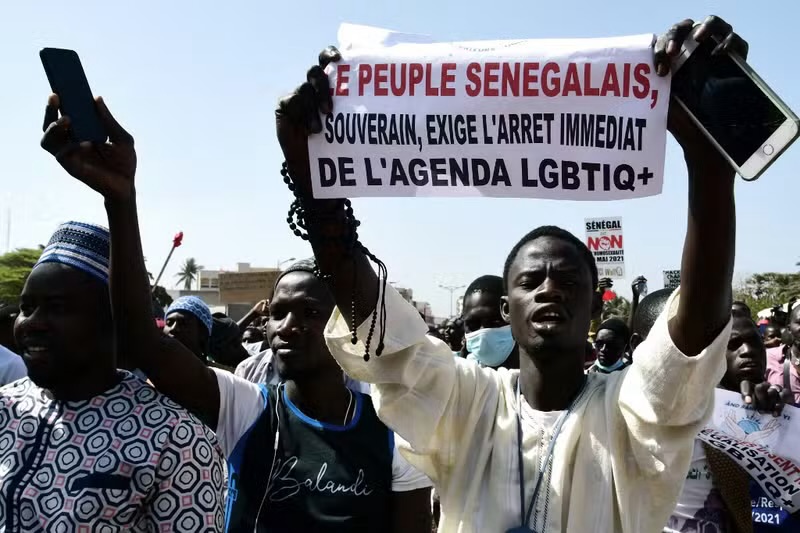
    “No to homosexuality!” Around a hundred people demonstrated Friday in Dakar to demand that the new Senegalese government adopt a law toughening penalties for homosexuality in the country, while an organization launched an initiative to this effect among parliamentarians.

    Chanting “Homosexuality will not exist in Senegal” and holding signs calling for “Zero tolerance” and the “criminalization” of homosexuality, the demonstrators marched along a road in a Dakar suburb, blocking traffic under the watchful eye of security forces, AFP journalists observed.

    The rally was held at the request of the Islamic NGO Jamra, the “Noo Lank” collective, which presents itself as a “citizen initiative working to preserve societal values,” and a Senegalese rapper who participated in the march.

    Tensions and discrimination against the LGBT+ community are common in Senegal, and the subject remains largely taboo.

    In this 95% Muslim and highly observant country, homosexuality is widely considered a deviance. The law punishes so-called “unnatural acts with a member of the same sex” with imprisonment of one to five years.

    The issue is also being used politically. In 2022, former opposition leader Ousmane Sonko—who became Prime Minister in the spring of 2024—made the fight against homosexuality a campaign argument for the legislative elections.

    On Monday, leaders of the “And sàmm jikko yi” (“Together for the Safeguarding of Values”) collective, composed of numerous associations, met with the parliamentary group of the ruling Pastef party to present an initiative to table a bill to strengthen the crackdown on homosexuality.

    The initiative is in the hands of Pastef deputies who will decide its fate.

    In May 2021 and February 2022, thousands of people demonstrated in Dakar for tougher repression of homosexuality.

    In December 2021, at the initiative of the “And sàmm jikko yi” collective, members of parliament introduced a bill that would have punished homosexuality with a prison sentence of five to 10 years. The bill was rejected by the Assembly’s bureau, which deemed the existing legislation too harsh.

  • In Senegal, the return of a bill to toughen the crime of homosexuality and “against the immoral values of the West”

    In Senegal, the return of a bill to toughen the crime of homosexuality and “against the immoral values of the West”

    The text proposes to punish anyone who commits an “unnatural act” with up to fifteen years in prison, whereas the Penal Code already provides for a sentence of one to five years.

    The issue of criminalizing homosexuality is once again being debated within the walls of the Senegalese National Assembly. On Monday, June 24, a member of parliament tabled a bill aimed at tightening existing legislation. In theory, the initiative enjoys broad support from the public, the House of Representatives, and the executive, since Prime Minister Ousmane Sonko, while still in opposition, promised in 2022 that this would be one of the first laws he would pass if he came to power. However, in practice, the adoption of this proposal by Parliament is proving delicate, as it could destabilize some of Senegal’s diplomatic relations.

    Until now, Article 319.3 of the Penal Code provides for imprisonment of one to five years and a fine of 100,000 to 1,500,000 CFA francs (€150 to €2,200) for anyone committing an “unnatural act with a member of the same sex.” But MP Cheikh Abdou Bara Dolly Mbacké, from the Liberté démocratie et changement parliamentary group, which is sponsoring the bill, wants to go further. “We must fight against the perversion of morals in our society, against these immoral cultural values imported from the West,” says the elected official, who joined the Diomaye Président coalition before Bassirou Diomaye Faye’s presidential victory in March. The text therefore provides for a sentence of ten to fifteen years in prison and a fine of 1 to 5 million CFA francs and would establish “offenses of bisexuality, transsexuality, necrophilia and bestiality.” In one month, this is the second proposal submitted to the National Assembly aimed at toughening legislation on homosexuality.

    “External injunctions”

    Furthermore, the text by MP Cheikh Abdou Bara Dolly Mbacké almost entirely reproduces the provisions of a previous proposal, which dates from 2022. Submitted to the vote of the deputies, it was rejected by the presidential majority at the time, which considered that the legislation was already “clear and precise” on the subject, and that there was no need “to add or remove a comma”.

    In an unchanged National Assembly, Cheikh Abdou Bara Dolly Mbacké nevertheless believes that his bill can now pass. “In 2022, this law was not passed because President Macky Sall’s regime blocked it in the face of Western pressure,” he asserts. “Today, it’s different; we have a prime minister who, I believe, will not give in to external pressure.”

    In mid-May, during a conference in Dakar with Jean-Luc Mélenchon on relations between Africa and Europe, Prime Minister Ousmane Sonko warned Westerners that their activism on behalf of homosexuals and sexual minorities could provoke a “new casus belli” with his country. It was also an opportunity for him to denounce the fact that “the issue of gender regularly comes up in the programs of most international institutions and in bilateral relations, often even as a conditionality for various financial partnerships.” Nevertheless, this proposed law embarrasses the new government. “Sooner or later, we will move towards this type of legislation,” said an advisor to the Prime Minister. “Today may not be the right time.” The same sentiment was echoed by members of parliament from the African Patriots of Senegal for Work, Ethics, and Fraternity (Pastef), the presidential party, and the Yewwi Askan Wi coalition.

    “Determined”

    The new proposal, while capable of satisfying a conservative electorate, could nevertheless have international consequences and disrupt Dakar’s diplomatic relations with Western foreign ministries, or even deprive it of certain institutional funding. For example, the World Bank has twice suspended its payments to Uganda after it adopted laws criminalizing homosexuality. The same threat now hangs over Ghana, which toughened its laws in February.

    “The executive is caught between its promises and the reality of exercising power,” comments Xalima, an LGBT rights activist living in exile in France. While the adoption of this law seems uncertain, the concerns of the LGBT community in Senegal are very real. “The country has become unlivable, to the point that every day we see people from the community leaving for neighboring states,” says Xalima.

    With the annual parliamentary session scheduled to end on Sunday, it seems “unlikely” that the vote will take place by then, according to the chairman of the Law Commission, Moussa Diakhaté. “We will resume parliamentary work in the first half of October,” he announced. Unless an extraordinary session is convened during the summer.

  • Free Senegal Collective

    The Free Senegal Collective has just been created in France!
    The association helps LGBTQI+ people in Senegal, notably by offering them shelter and social support, and by providing them with all the legal assistance they need.
    As you might expect, the association is in dire need of raising funds to finance all its initiatives—and they are necessary and numerous.
    👉https://www.collectif-free-senegal.org/

  • STOPhomophobia Partnership

    Emergency shelter, legal support, social assistance… We are proud to announce the official creation of the Free Collective of #Senegal, which also has a free national helpline dedicated to vulnerable people and victims of LGBT+phobia. #afriquedelouest🌈
    We remind you that the criminalization of homosexuality, as provided for in Article 319 of the Senegalese Penal Code (dating from 1966), is contrary to the country’s constitution and international treaties to which Senegal is a party. We demand respect for human rights and the primacy of the rule of law. Senegalese courts must no longer apply this article.

    #LGBTRightsAreHumanRights

    #lgbtnews

    👉https://collectif-free-senegal.org

  • NEW HOMOPHOBIC RALLY IN SENEGAL

    A new #homophobic rally will be held this February 20th in #Senegal, called by the “And Samm Jikko” collective (Together for the Safeguarding of Values, in Wolof), composed of religious associations. The protesters are calling for a new review by MPs of a bill toughening the laws on the subject, recently rejected by Parliament. This is a new march of shame, calling for a strengthening of the repression of homosexuality, which is already punishable by one to five years in prison. This proposal also includes “lesbianism, bisexuality, transsexuality, intersexuality, bestiality, necrophilia, and other similar practices.”

    It should be noted that even in death, the graves of LGBTQI+ people are desecrated, if not outright refused, in most cemeteries.
    The Free Collective of Senegal is sending a new warning to the entire international community.

    #stophomophobia

    #LGBTRightsAreHumanRights

  • SENEGAL: THE HEAD OF THE LGBTQ NGO PRUDENCE WAS ATTACKED AGAIN

    SENEGAL: THE HEAD OF THE LGBTQ NGO PRUDENCE WAS ATTACKED AGAIN

    Djamil Bangoura, the head of the Senegalese LGBTI NGO Prudence +, founded in 2003, was beaten on February 10th in Pikine. This latest attack required emergency surgery. Gradually recovering from his injuries, he told 76crimes about his attack, still in shock.

    1. Can you tell us about the circumstances of your attack?

    “On February 10th, I was riding a bus in the late afternoon, between 4:00 PM and 5:00 PM, in the area between Keur Massar and Malika Village, on the outskirts of Dakar, to get home. While the bus was stopping, a group of three people boarded, intending to have a serious fight with me. Very quickly, homophobic insults were hurled at me and I was called all sorts of names, and then it was just a frenzy of blows, even though I tried to defend myself. I was beaten with a stick after one of my attackers shouted, “he’s the biggest of the goordjiguen (a term used to refer to gays in Senegal and which can have a very pejorative connotation – literally it means man-woman). During this fight, the women nearby were screaming, while a fairly old man tried to intervene without success. I tried to resist and return blows, but three against one, they were far more numerous than me. Finally, it was a violent kick to the stomach, at the level of the sternum, which almost made me lose consciousness. However, even on the ground, I remember the blows continued to rain down, but I couldn’t do anything.”

    1. What were the consequences of this attack?

    “They were mainly medical, because now I’m reluctant to go to the police station when I’m attacked. A paramedic ambulance arrived on the scene once the attackers had left. I received some treatment for superficial skin lesions and abrasions. However, the next day, my abdominal pain was intense and required observation at the Ouakam military hospital. It was after an X-ray that it was decided to have emergency surgery. Following the surgery, it was decided to keep me under medical supervision for a total of two days.”

    1. Do you wish to pursue legal action by filing a complaint?

    “The incident occurred barely 500 meters from an understaffed police station in the late afternoon, and although I recognize one of my attackers, I don’t want to. He often hangs around the neighborhood where I live and insults me almost daily when he sees me. In fact, he was probably behind the surveillance that led to the ambush I was subjected to. He may know my habits. In any case, it is certain that I was not targeted by chance, and this is not the first time that I have been physically attacked. Since 2006/2007, I have been attacked no less than seven times, and to date, none of my complaints have been successful. I still remember the trauma of my first attack, when some youths from my neighborhood came and poured cans of gasoline to set fire to my old home. At the time, the neighborhood leader and the imam who had ordered this assassination attempt weren’t even bothered by the authorities.

    1. How do you see your future?

    “For now, I need rest to complete my recovery. And for that, I’ll have to get away from my usual haunts a bit, so that I don’t run into the same gang that got me hospitalized.”

  • “Homosexuality at school”: Unions prepare response against UNESCO

    Accusing UNESCO of organizing a seminar to introduce issues related to homosexuality in schools, teachers’ unions are organizing to respond.

    This reform was supposed to be carried out with the utmost discretion. But the teachers’ unions spilled the beans as soon as the work was completed. Last week, from December 21st to 23rd, UNESCO brought together education stakeholders in Saly to validate a module on sex education and reproductive health in Senegalese schools.

    According to Inspector Sylla, who represented SELS/Authentique, led by Abdou Faty, the meeting included natural science and French teachers, inspectors, and those in charge of the Curriculum Reform Support Program (Parc) at the Ministry of National Education. And it was precisely this park that was supposed to serve as a Trojan horse for introducing lessons related to homosexuality through sex education. This is how, according to union representatives, we find expressions like “hot social issues,” “a catch-all” supposedly a module.

    According to Inspector Sylla, who spoke via audio recordings shared on WhatsApp, items drawn from international principles were presented to school staff. And the teachers and inspectors of each subject were asked to state whether the landlords’ concerns had been taken into account in the curricula. If not, they should explain how it is possible to introduce them into core skills. “Some French teachers even said that this subject could be a welcome discipline, since, they say, Mariama Ba addressed these issues in her writings,” reports Sylla.

    But that was without taking into account the determination of the union representatives, members of the G7, who simply sent UNESCO back to its desks. “All the union organizations have vigorously rejected these proposals, which do not align with our values ​​and beliefs,” declared Abdou Faty, Secretary General of Sels/Authentique, contacted by Seneweb.

    The same position was taken by CUSEMS. Deputy Secretary General Ndongo Sarr specified that the union’s Secretary General, Abdoulaye Ndoye, who took part in this meeting, categorically rejected this initiative. “We consider it a continuing farce. Two years ago (in a hotel on the Vdn), a workshop was organized during which the same issue was raised. We rejected it because if it passed, it would destroy our values,” Sarr recalled.

    Faced with the unions’ stance, they were offered a conditional signature. They refused. Today, in addition to the rejection, the teachers are announcing a series of measures to address it. A press conference is planned in a few days. Faty and Sarr are announcing visits to religious authorities to encourage their support. They are also calling on the people to stand up to such an agenda.

    According to our sources, this new attempt is proof that Westerners will never back down in their desire to impose their worldview on other peoples, particularly homosexuality. It remains to be seen whether the current Minister of National Education, Mamadou Tall, will follow in his predecessor’s footsteps. Indeed, two years ago, Serigne Mbaye Thiam, then the minister responsible, openly opposed this issue.

    To force him to take a stand, Abdou Faty reveals that the unions will call on the minister to speak out “unambiguously” on the subject. And such proposals should no longer be made to them “in a sugar-coated manner.”

    For these two unionists, the root of the problem remains the same: education funding. “If they dare to make these proposals to us, it’s because we don’t have endogenous funding,” says Abdou Faty, who calls on the government and the Senegalese people to agree to provide the necessary resources to avoid resorting to these groups called technical and financial partners. “Every time you request funding, if the gender dimension isn’t taken into account, they are reluctant,” adds Ndongo Sarr.

    Therefore, the best way to preserve your values is not to reach out to them, because even if the project is withdrawn in the face of an outcry, it will sooner or later come back to the table, in one form or another… perhaps even more subtle.